

Services We Offer:
Commercial Mediation
Commercial mediation assists businesses, organisations, and professionals in resolving disputes arising from commercial relationships. This includes contract disputes, partnership disagreements, supplier or customer conflicts, and professional service issues. Mediation offers a cost-effective, confidential alternative to litigation, allowing parties to protect commercial interests, manage risk, and preserve ongoing business relationships.
Family mediation helps individuals resolve disputes arising from family relationships in a respectful, structured, and confidential environment. Common matters include separation or divorce arrangements, parenting plans, care of children, elder care, inheritance issues, and communication breakdowns between family members. The focus is on preserving relationships where possible and reaching practical, mutually acceptable agreements without the stress and cost of court proceedings.
Employment mediation supports employers and employees in resolving workplace disputes efficiently and confidentially. This may include conflicts relating to performance issues, disciplinary matters, workplace relationships, bullying or harassment claims, redundancy discussions, or contract disputes. Mediation aims to reduce workplace disruption, protect professional relationships, and achieve fair outcomes without formal litigation.
School mediation helps address conflicts within educational environments, involving students, parents, teachers, or school management. Common matters include student disputes, parent-school communication breakdowns, behavioural concerns, and misunderstandings regarding school policies or expectations. The process promotes respectful dialogue, problem-solving, and positive outcomes that support student wellbeing and a healthy learning environment.
Neighbouring mediation assists parties in resolving disputes between neighbours that may otherwise escalate and damage long-term living relationships. Typical issues include noise complaints, boundary disputes, property access, pets, parking, and shared facilities. Mediation provides a neutral forum for open discussion, helping neighbours reach workable solutions and restore respectful communication within the community.
Community mediation addresses disputes within local communities that don’t neatly fit into family or neighbour categories. This may include conflicts within community groups, clubs, charities, religious organisations, or between individuals and community bodies. The focus is on restoring communication, mutual respect, and community harmony.
This type of mediation focuses on conflicts within organisations, such as disputes between colleagues, teams, managers, or departments. It is often used proactively to prevent escalation, improve communication, and rebuild working relationships rather than resolve legal claims.
Civil mediation covers a wide range of non-criminal disputes between individuals or entities, such as personal disputes, debt-related conflicts, service disagreements, or property-related issues not covered by commercial mediation. It provides a flexible, cost-effective alternative to court proceedings.
This involves disputes between consumers and service providers, including complaints about quality of service, fees, or unmet expectations. Mediation helps parties reach fair outcomes without formal complaints processes or tribunal involvement.
Referral/lnvitation
· Written request to mediate, parties agree the dispute to be mediated
· Parties agree a mediator
· Mediator confirms no conflicts and accepts in writing
Key Elements of the Agreement
· Appointment of mediator
· Roles, responsibilities and process
· The mediator's impartiality and conflict of interest disclosures
· Confidentiality obligations
· A clear time frame, fee schedule and cost sharing
· Termination conditions
· How any settlement will be recorded
· Signed by both parties and the mediator
Suitability & safety screening
· Check whether the dispute is appropriate for mediation
· Check whether the issues are amenable to a negotiated solution
Explaining the process
· The mediator's role
· The voluntary nature of mediation
· Confidentiality and its limits under legal obligations
· What to expect in joint sessions or private sessions
Identifying issues & interests
· Each party tells their side, explain what matters most, and flag concerns
· The mediator to prepare an agenda
Logistics
· Confirm participants, representatives (lawyers, support people if any)
· Confirm timing
· Confirm the venue or online platform
· Confirm any adjustments needed (interpreters, accessibility, etc.)
Consent to proceed
· The mediator confirms willingness from both sides to go ahead if suitable
· The mediator may recommend alternative dispute resolution pathways if not suitable
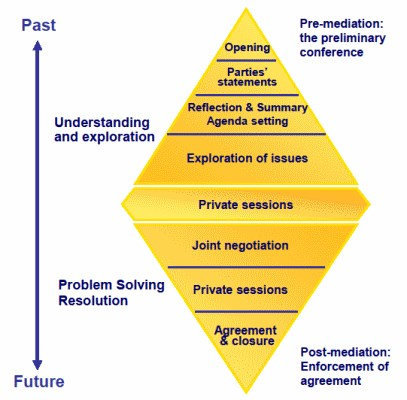
The Mediation Process by Resolution Institute:
If settlement is reached
· The parties may implement the terms immediately
· The parties may formalise in a Deed of Settlement prepared by lawyers
· The mediator provides a copy of agreement to each party
· The mediator confirms that the mediation has concluded
· The mediator refers to legal or professional advisors if appropriate.
If no settlement is reached
· The parties may return for a follow-up mediation session
· The parties may proceed to litigation or tribunal without prejudice
· The mediator formally closes the mediation
· The mediator may provide a closure statement but cannot disclose confidential content (only note that no agreement was reached)
Continuation of Mediation
· If the parties don’t reach full agreement in the first session, the mediator may adjourn and schedule additional mediation sessions
· The continuation keeps the process voluntary, confidential, and within the same “Agreement to Mediate”
· A new “Agreement to Mediate” may be required if there are major changes
Procedure
· The mediator will summarise progress and clarify remaining issues
· The mediator will agree with the parties on the timing and format of further sessions
· The mediator will confirm any interim arrangements